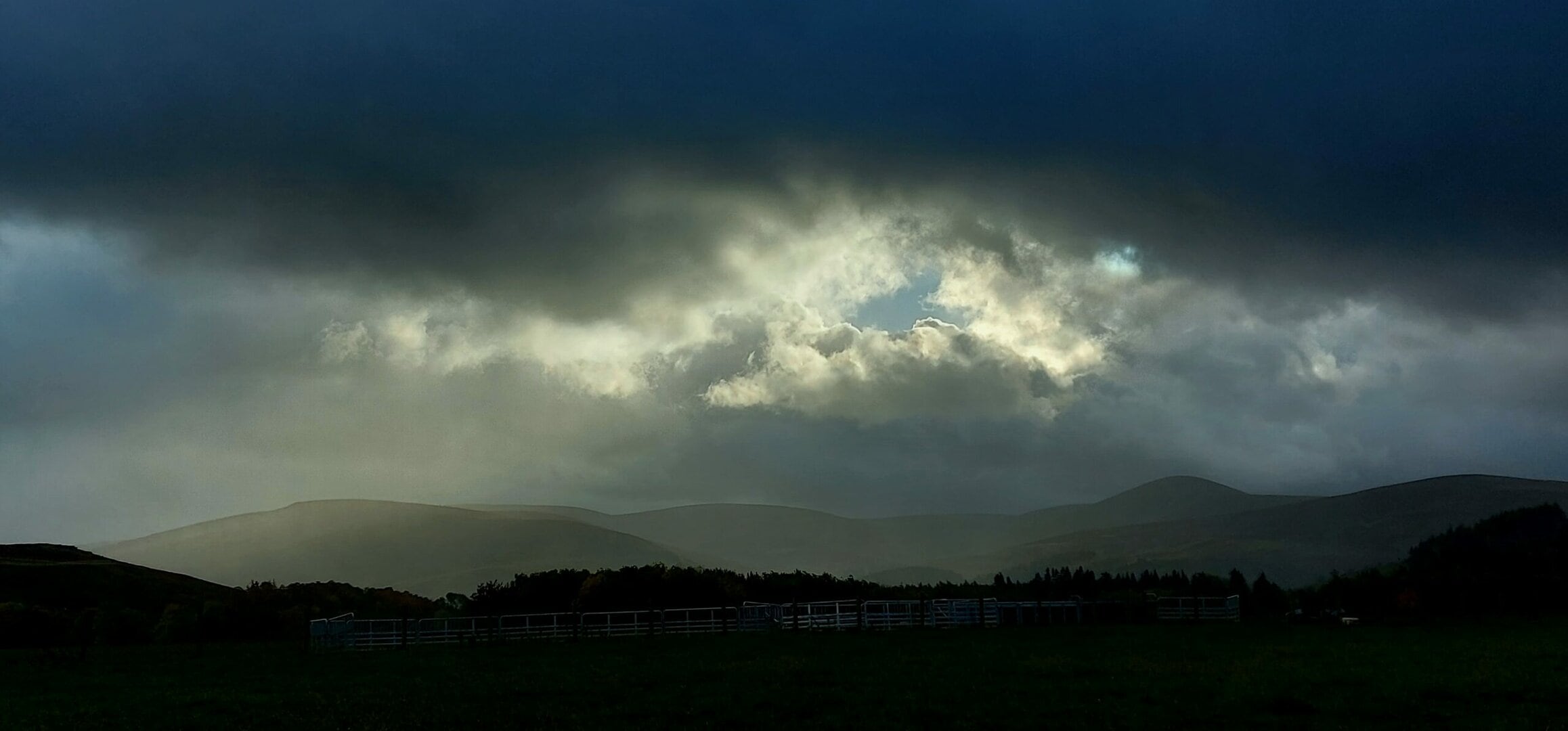
A wet Wednesday morning with stormy skies and strong winds blowing the rain sideways over the landscape (and us!).

In Trench 5 we continued digging our allocated sections – Cameron and Neil investigating a slot through the ditch – looking for a difference in the soil, finding where the cut lay and following it round.

There was a steep side and a more gradual slope of the orange sub soil.

Ross, Malcolm and Rob trowelled a slot through the stones in the south east corner.
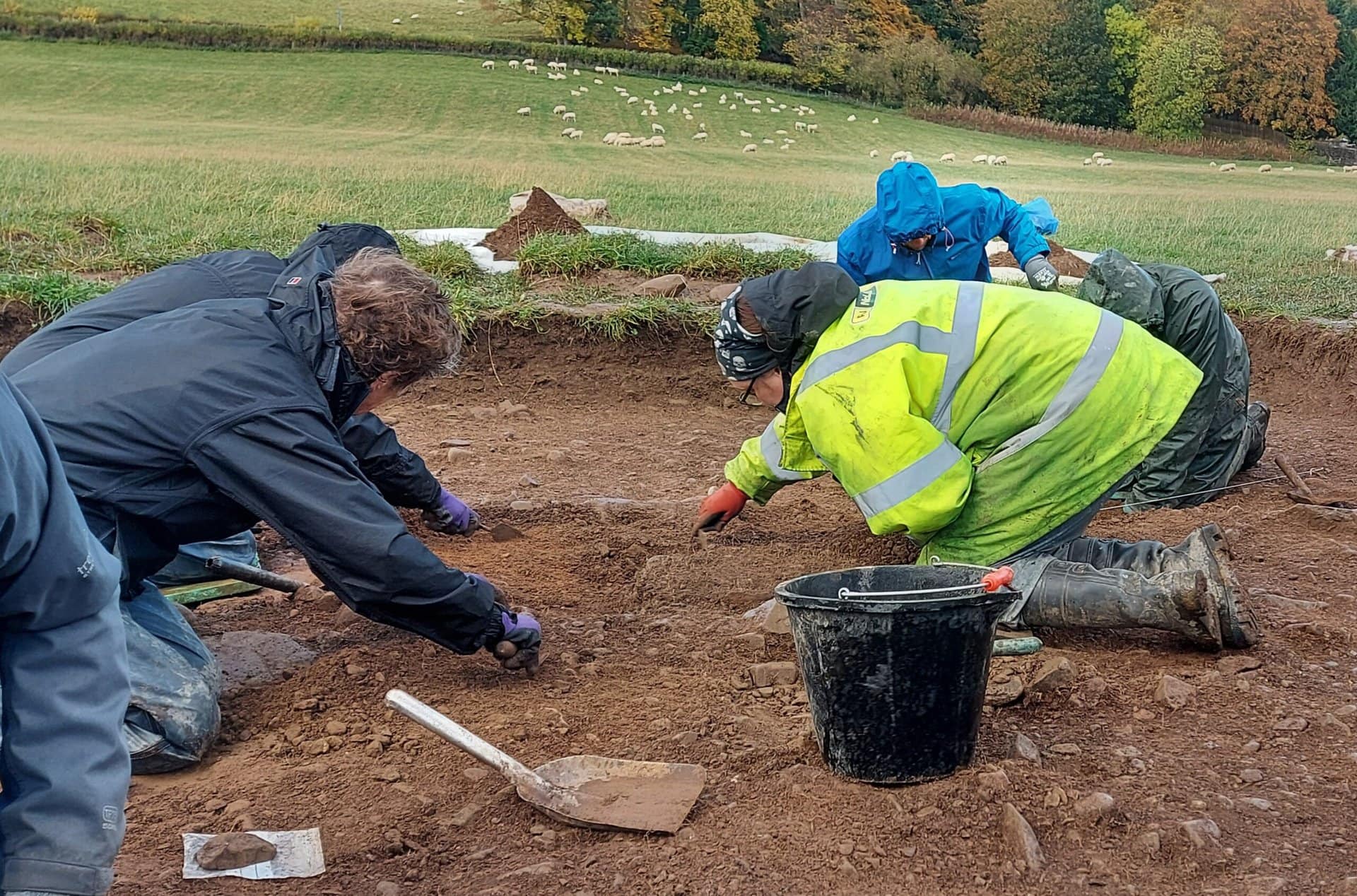
Joyce and Cherry cleared around the central feature, collecting all the spoil for sampling under the guidance osteoarchaeologist Amanda.

Michelle and Mel worked on the long slot in the foreground, to reveal a typical plough furrow caused by an ox-drawn plough forming a double U shaped cut in the soil.
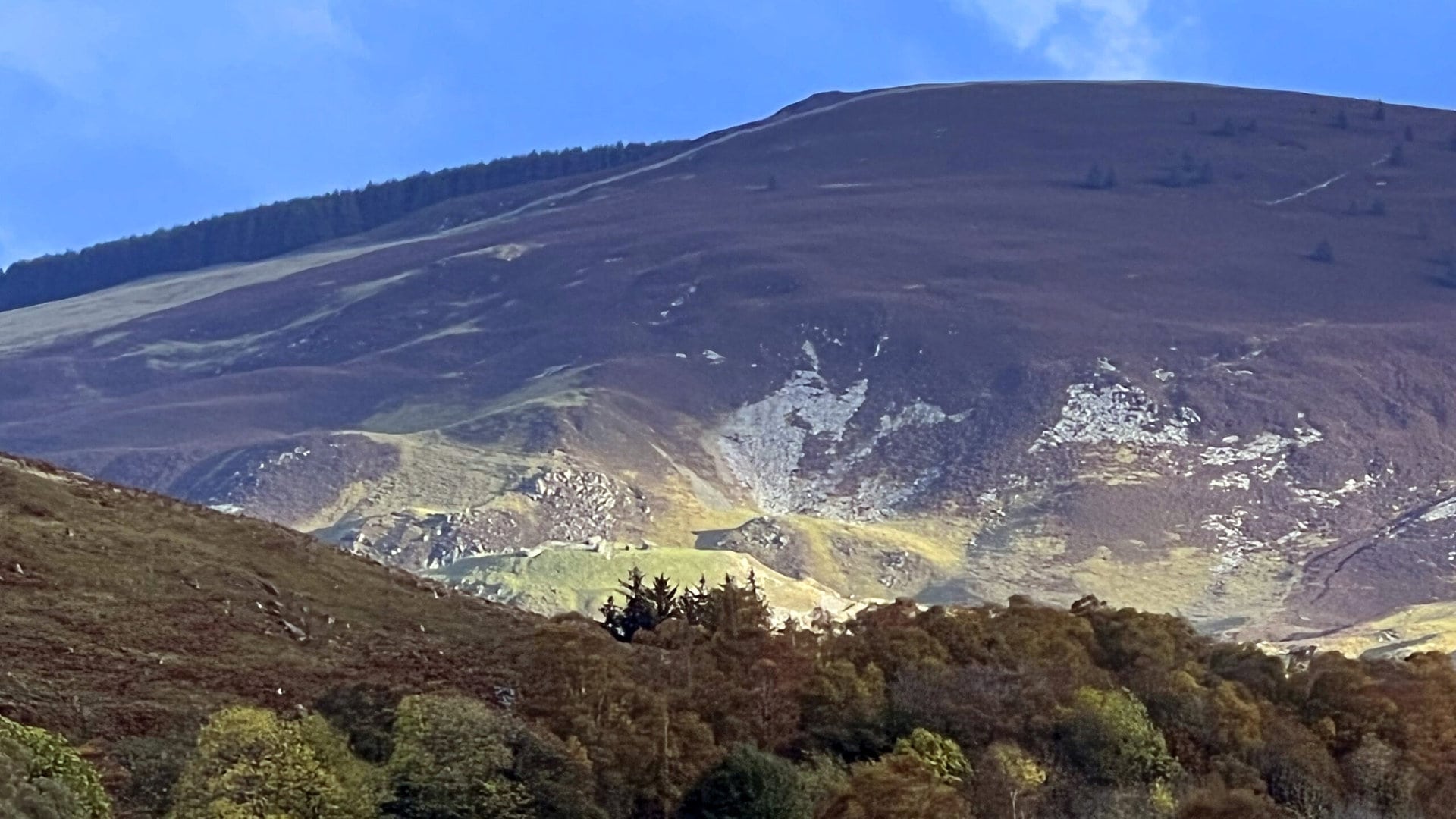
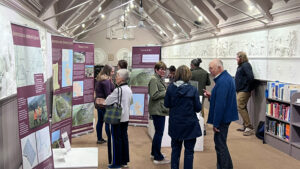
As the sun broke through the clouds over distant Tinnis, we were joined by several visitors on site!
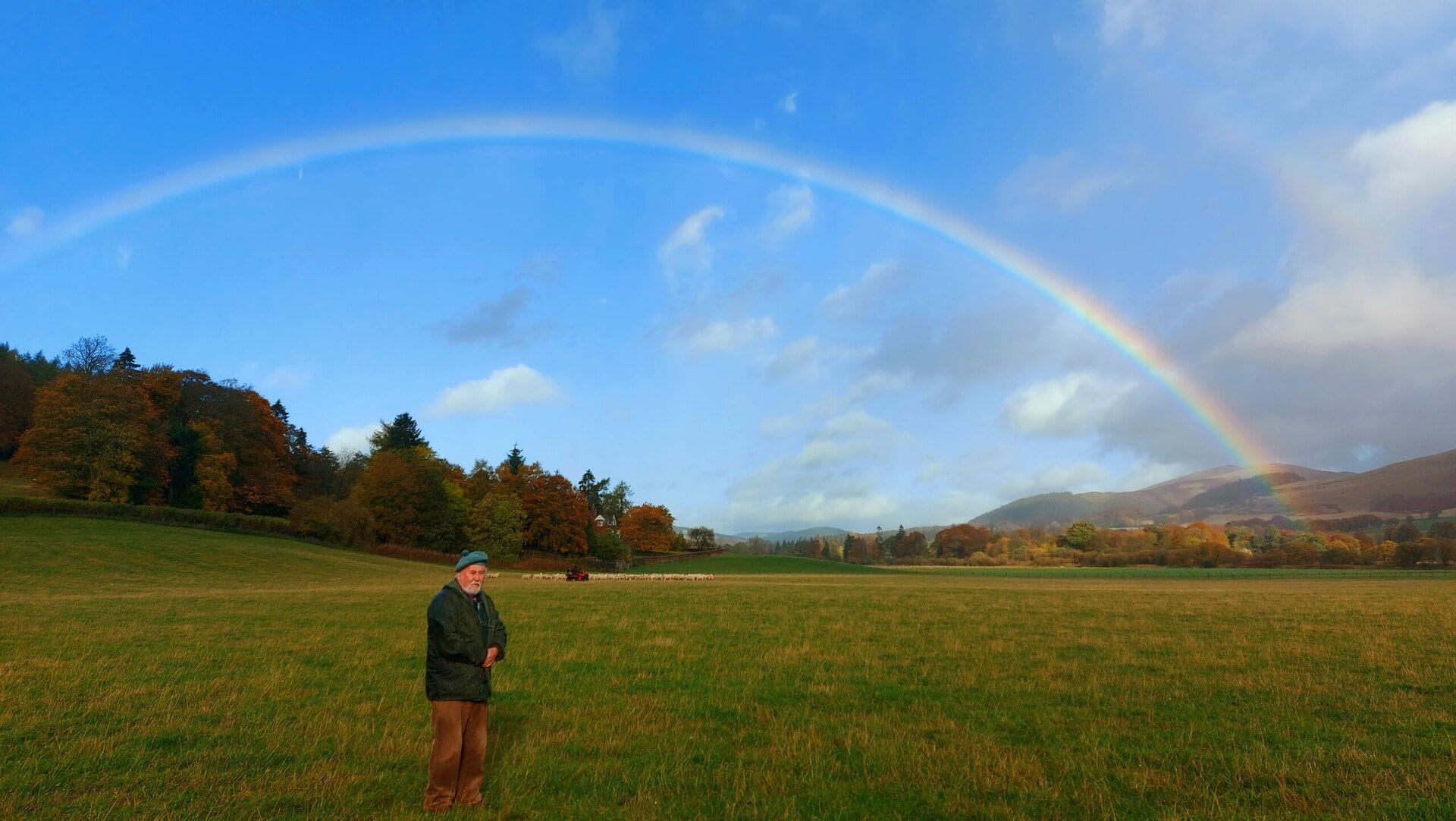
Robin, a master of the theatrical, materialised out of the landscape under a halo! This deific appearance was met with some suspicion by…

Archaeologists Strat Halliday and Trevor Currie, who had been following our Daily Dig Diaries and are both experts in the period and the area.
Tamsin provided an update. (see video:)
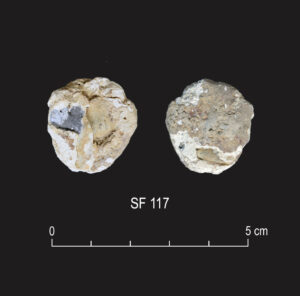
Trevor, being a Bronze Age expert, was intrigued to examine our pot fragment… (see video:)

Alan and Maureen from GUARD Archaeology arrived with their OSL (Optically Stimulated Luminescence) equipment to take samples from Trench 4.
(see separate blog – coming soon!)

Amongst our other visitors were Zac 9the dog) and artist Susheila Jamieson. Susheila and her husband, James Gordon, live just across from the site and our dig only resulted because it was James who first spotted the crop marks in the fields, in the dry summer of 2018, when he was walking in the field to the west and above the site.
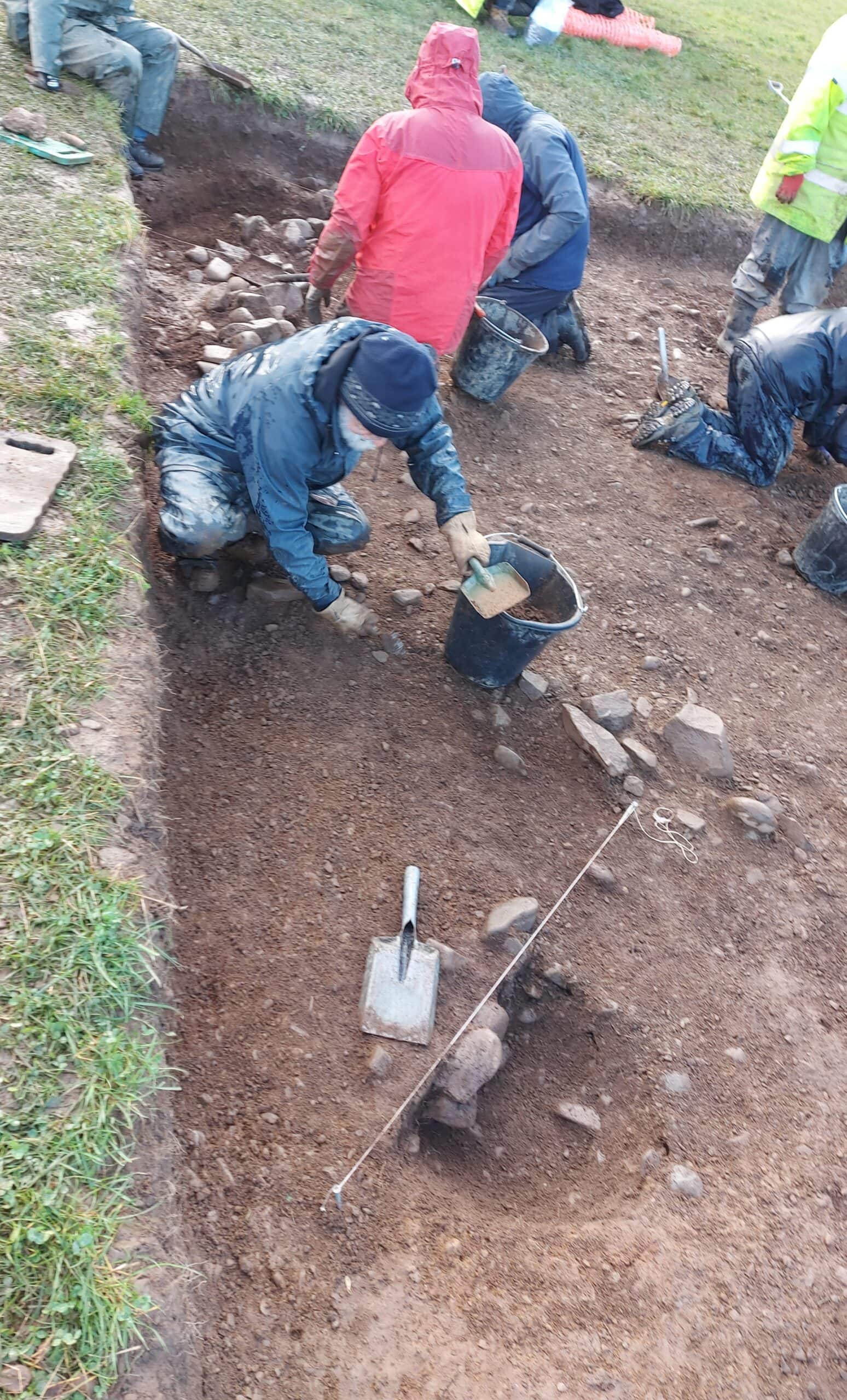
Lex began to tidy the area around the pit cross-section he had dug, to prepare it for photography. Lex found some pieces of burnt bone in the pit, which suggest that there may have been another burial here.
This provoked the thought that there may be even more burials within this barrow and Trevor, who is now retired from the National Museum of Scotland and has specialist knowledge of Bronze Age artefacts, suggested that this site might indeed have been used over several centuries, rather than just having been used for the one central burial. One or two other potential locations were mooted. The story could be quite complex.
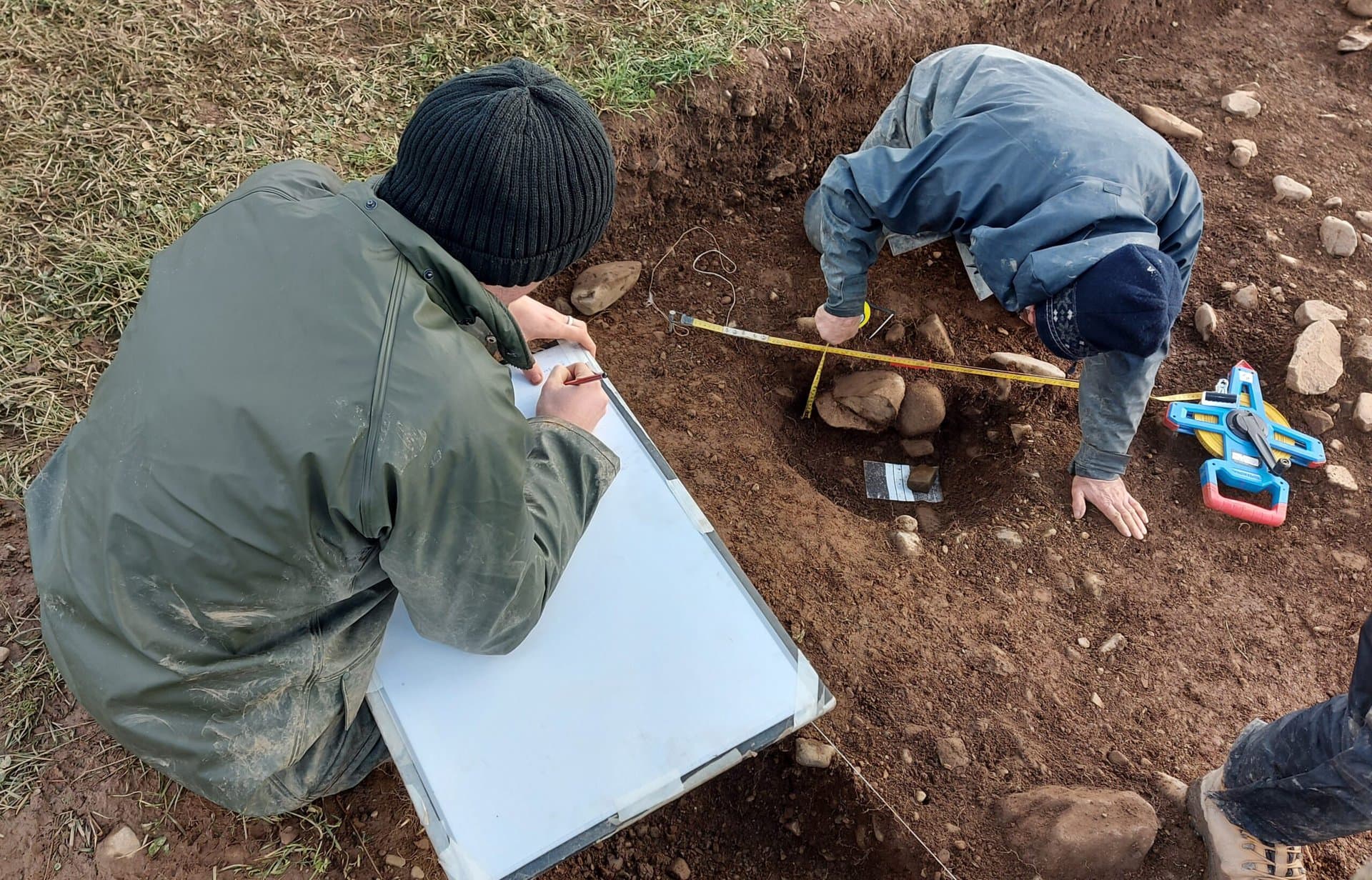
After photographing the pit, Rob helped Lex to record the precise measurements in a drawing of the section.

The earth around the central ‘ring’ of pot pieces was carefully dug away. More pieces of human bone were found to the south east of the feature, necessitating a call to the police as, even though the bones are probably pre-historic, the police need to be notified. The bones were protected by a wheelbarrow in the interim.
Amanda indicated the possibility of multiple inhumations. The wheelbarrow is also covering a large, flat stone which could be the cap stone of a burial. The collection of rocks (bottom right of the picture above) may mark the position of another burial site and there may be others too.
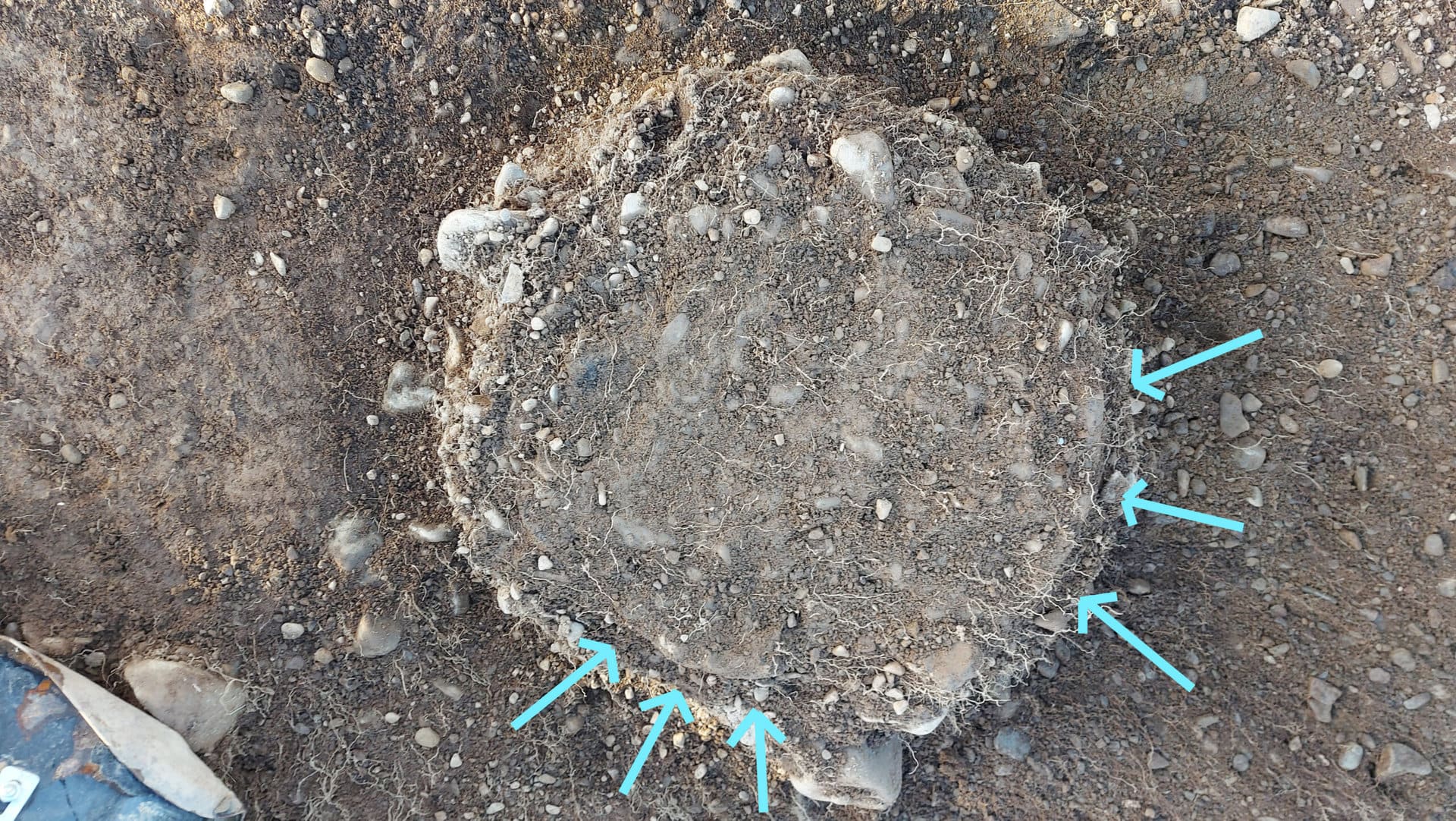
Another long section of pot was revealed (indicated by blue arrows above). Trevor suggested an alternative possibility – that this is perhaps what is left of an inverted bucket urn (a simple, upturned bucket-shaped pot). In which case what we are seeing would be the rim – with the rest of the bucket broken up by the plough (and/or other factors). In this case, we would be looking at a date around 2000 to 1500 BC.
It was suggested that if the rim of pot that Lex found beside the south edge of the trench [see Day 6] is different to the central pot, it is likely to be slightly later – around 1500 to 1000 BC. Lab tests will help to confirm dates.
All wrapped up
Having been dug around and under-cut as much as possible, the central pot feature was carefully wrapped up with bandages, clingfilm and masking tape. The time had come to lift it, keeping it within a block of surrounding soil.
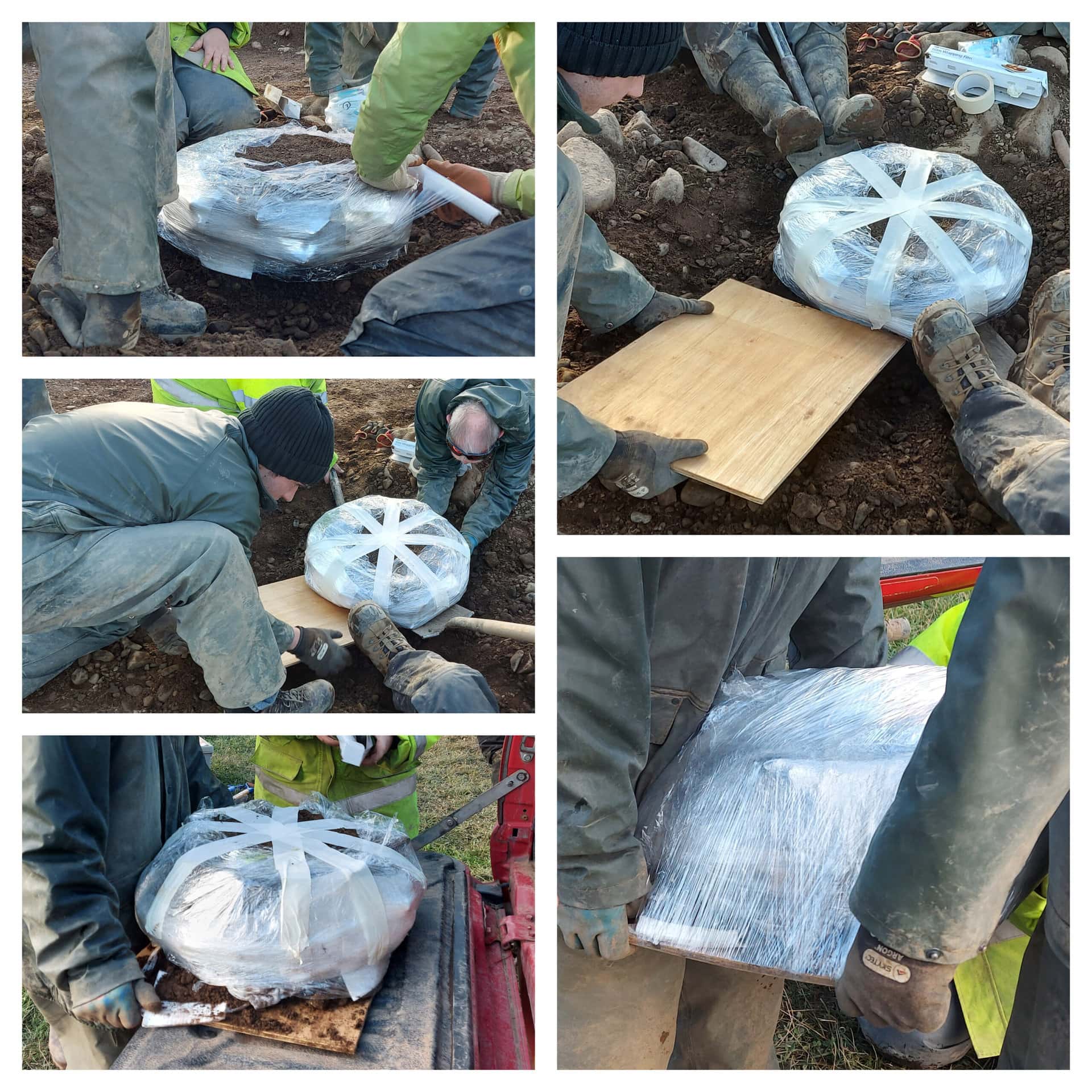
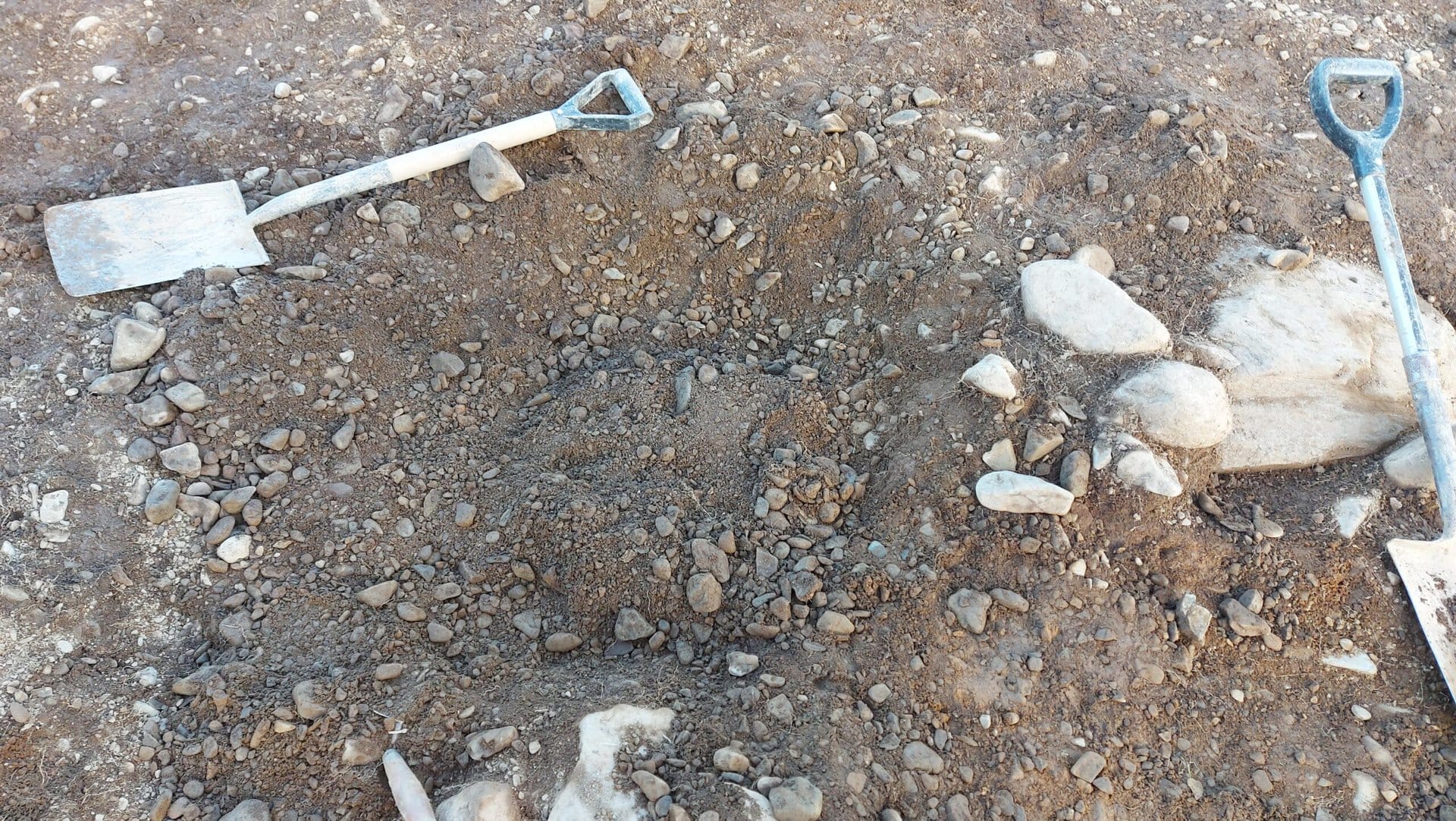
The soil that had been under the block together with that of the other areas we had been investigating will be bagged tomorrow for laboratory analysis.
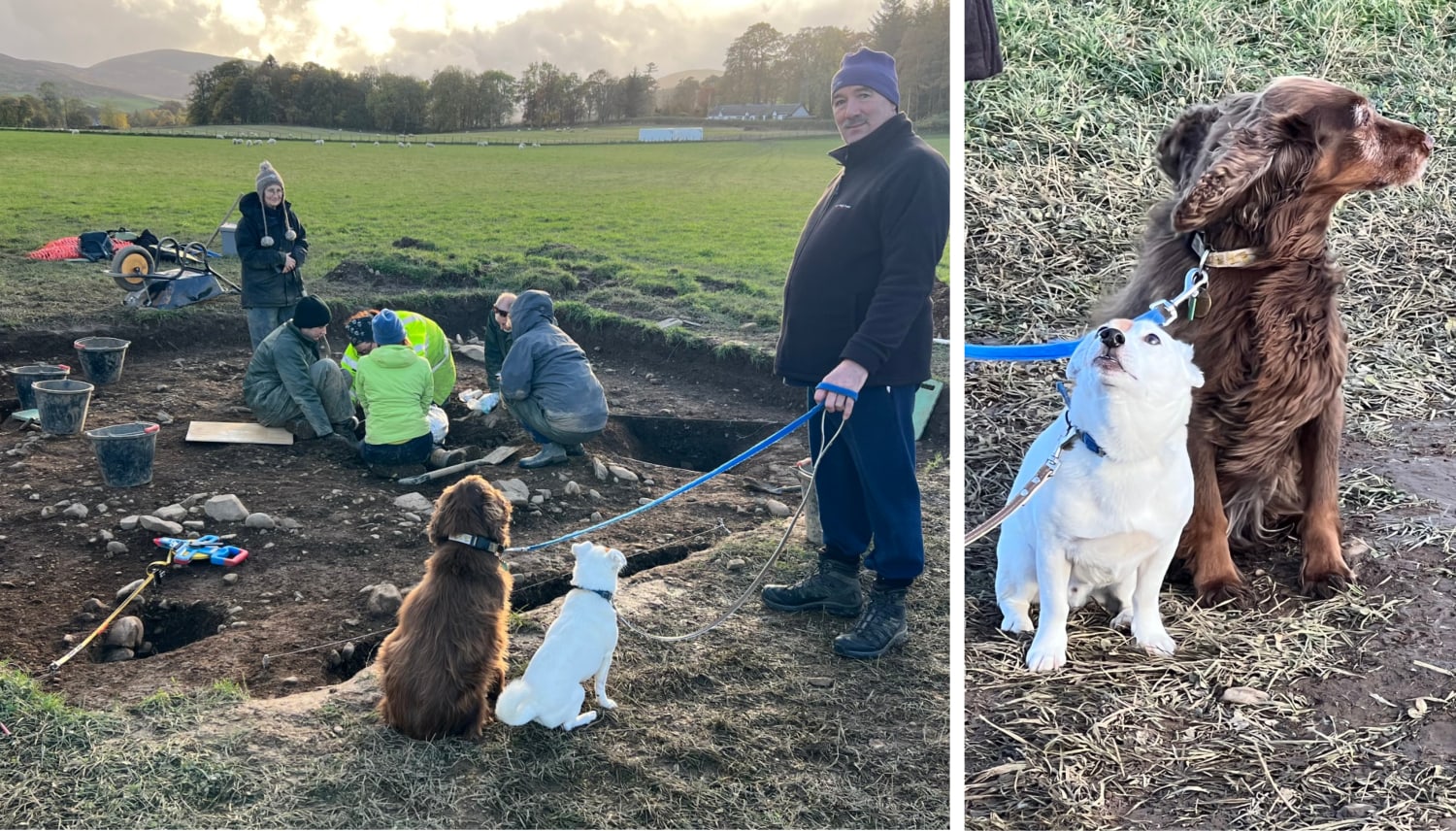
Local resident Neville arrived with his two dogs just in time to watch the pot being lifted!
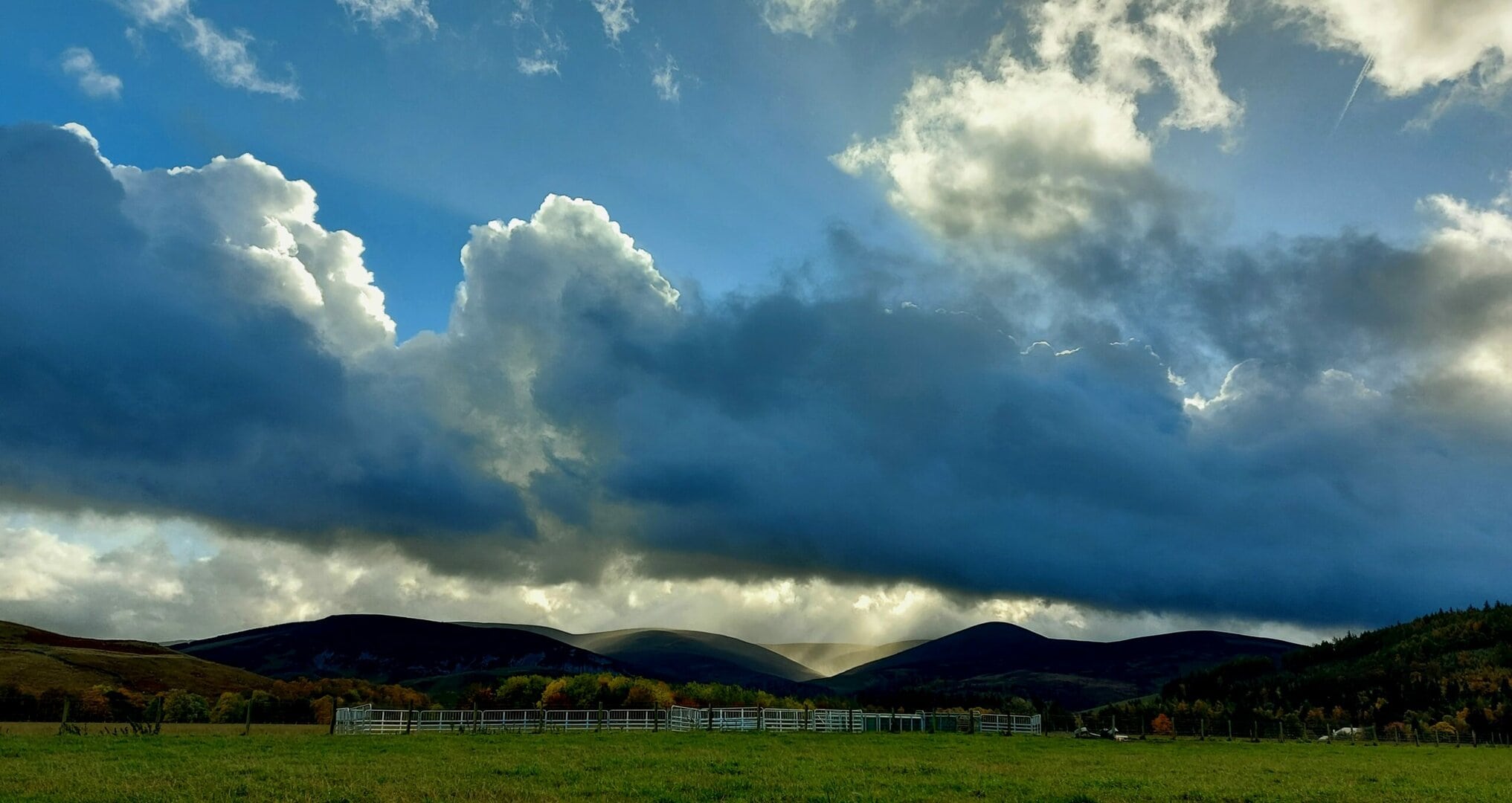
The day ended with our fair share of blue sky – another good day at the Thirlestane Barrows! Only 2 more to go…