


It was a cold, wet and blustery start to the final day in Trench 5 at Thirlestane Barrows, but as that blew through, we were very lucky to be treated to the best of the late October sunshine.

Cameron came dressed for the occasion!
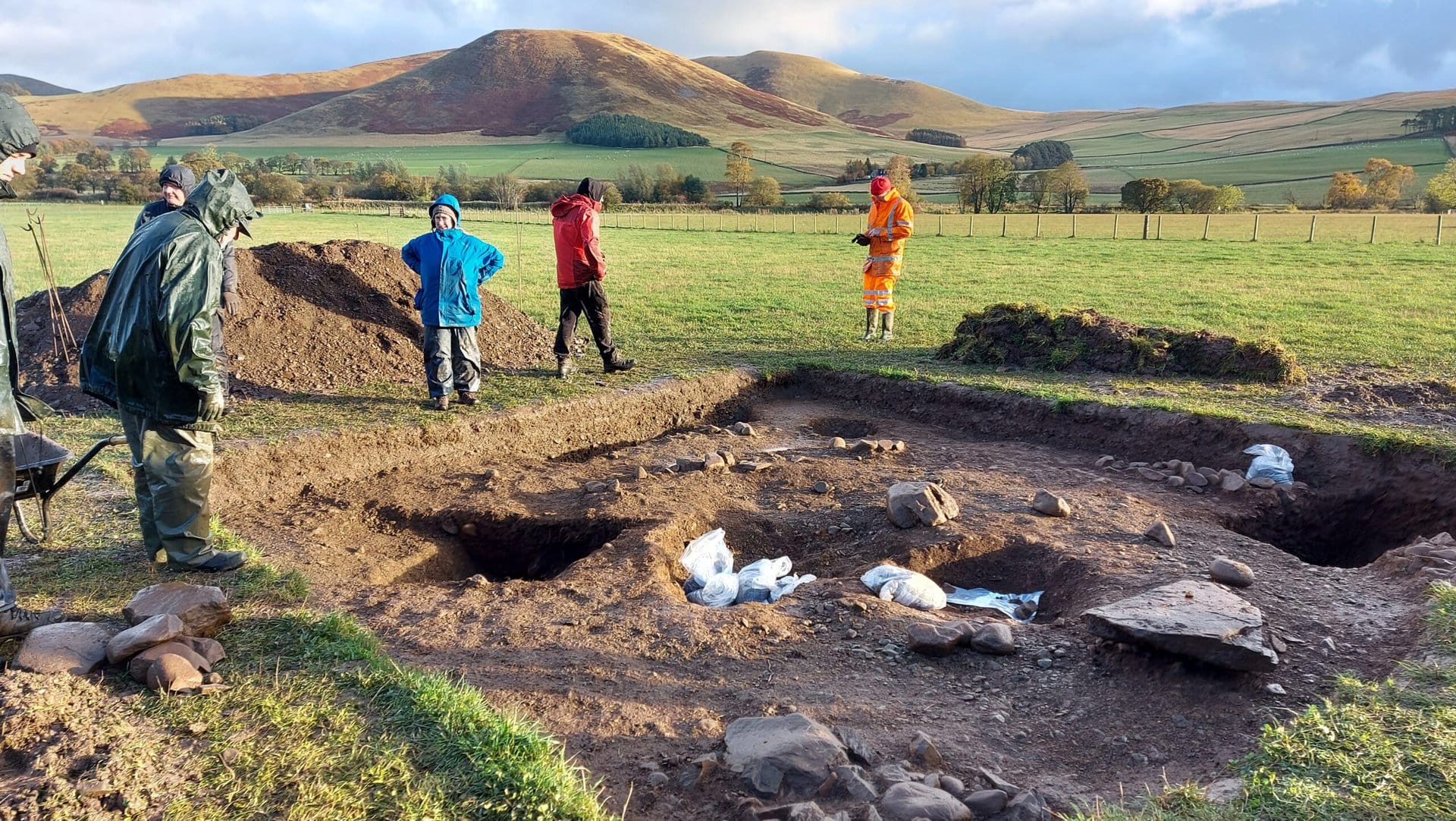
Unwrapped from its overnight covers, Trench 5 revealed the two partially excavated burial sites – the large ‘capping’ stones moved from their locations of several millennia.
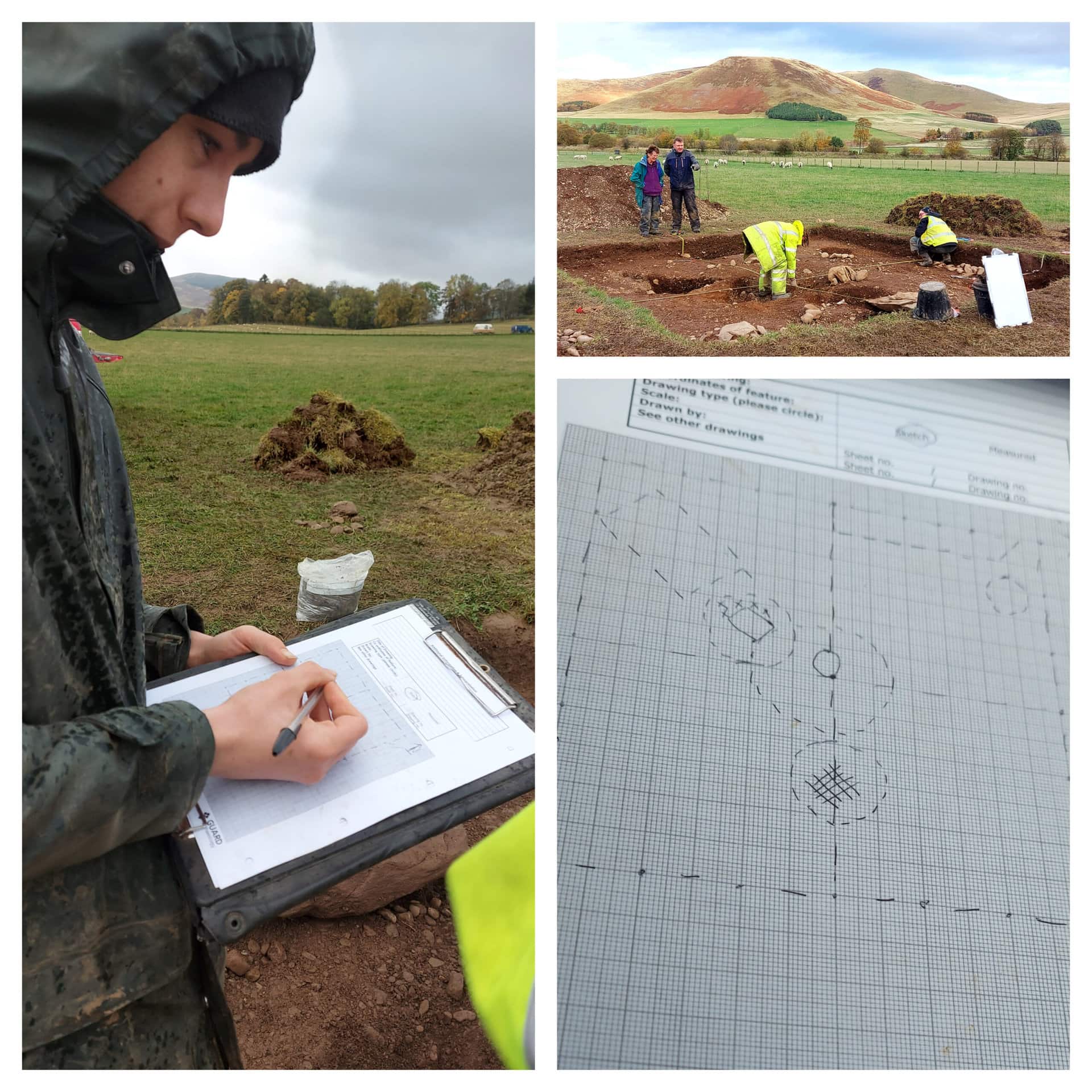 Charlie was tasked with making a sketch of the whole trench – quartered to aid rough positioning of the features.
Both he and Ross stayed on an extra night (what’s one more night in the van?) so as not to miss out on the final day’s events.
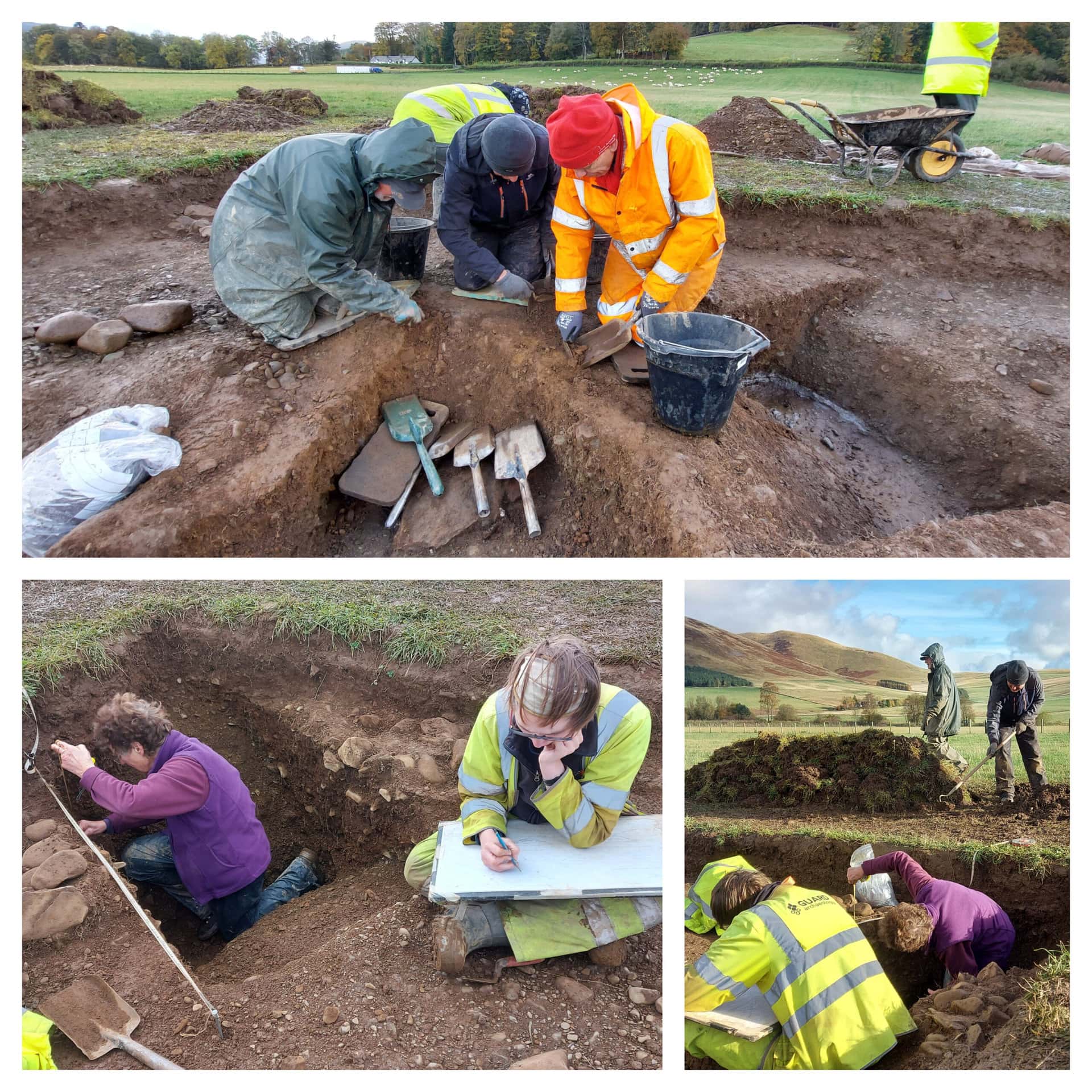
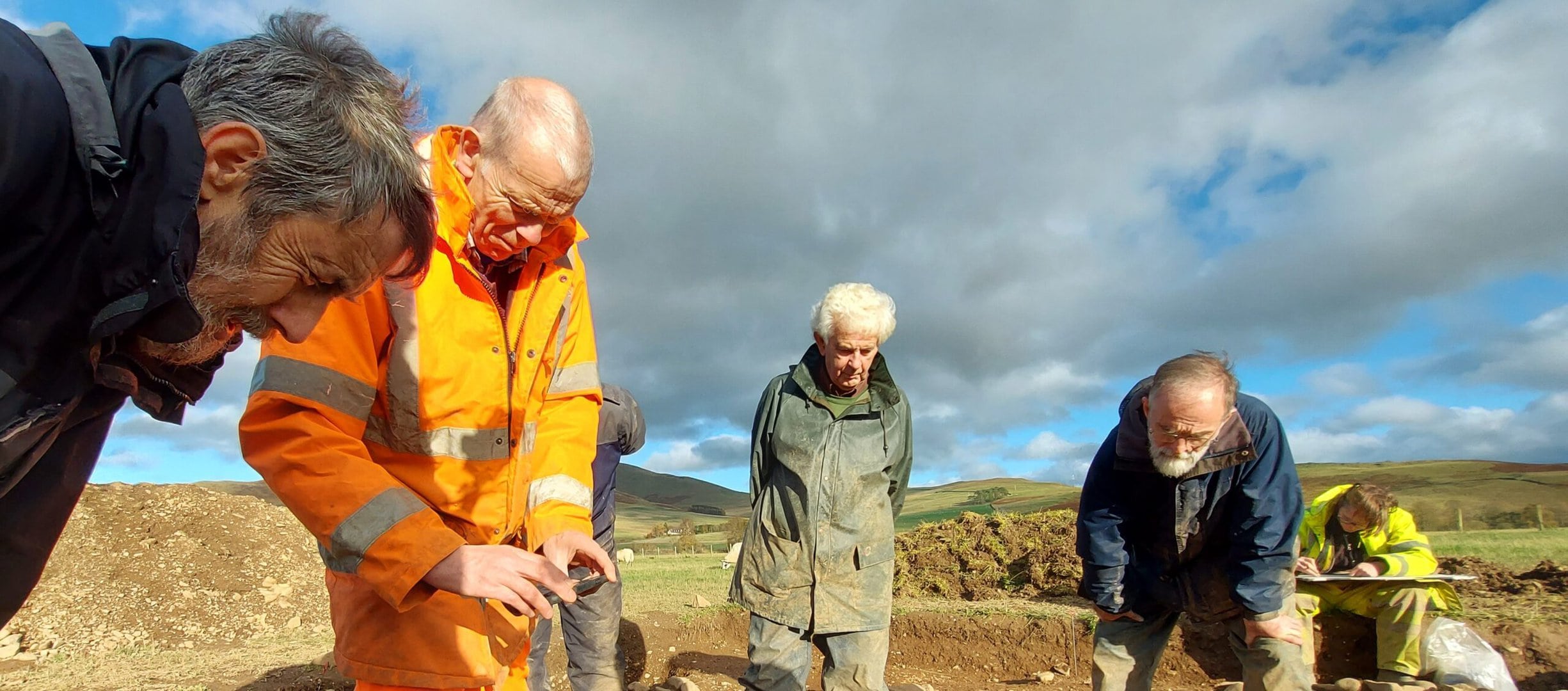
Neil, Ross and Cameron ‘chased the edge’ of the last cremation feature (using shovels to protect the fragments of pot); Joyce helping GUARD archaeologist Katharine with recording lifting the turf/ sods as well as clearing resulting mud from the grass.
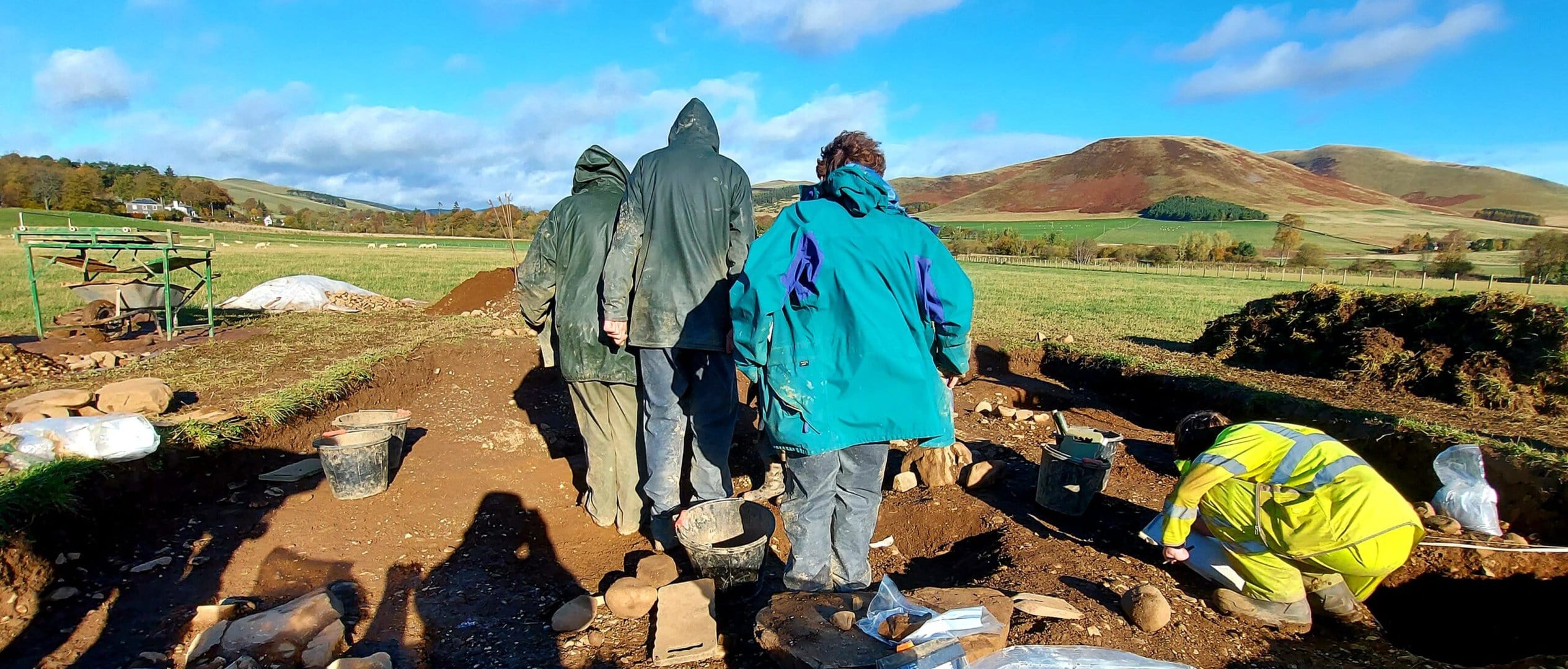
Typically the sun came out just as recording photographs of the pot pieces in situ began so we had to create a human shadow to reduce the contrast (also see main photo when back up was required!)
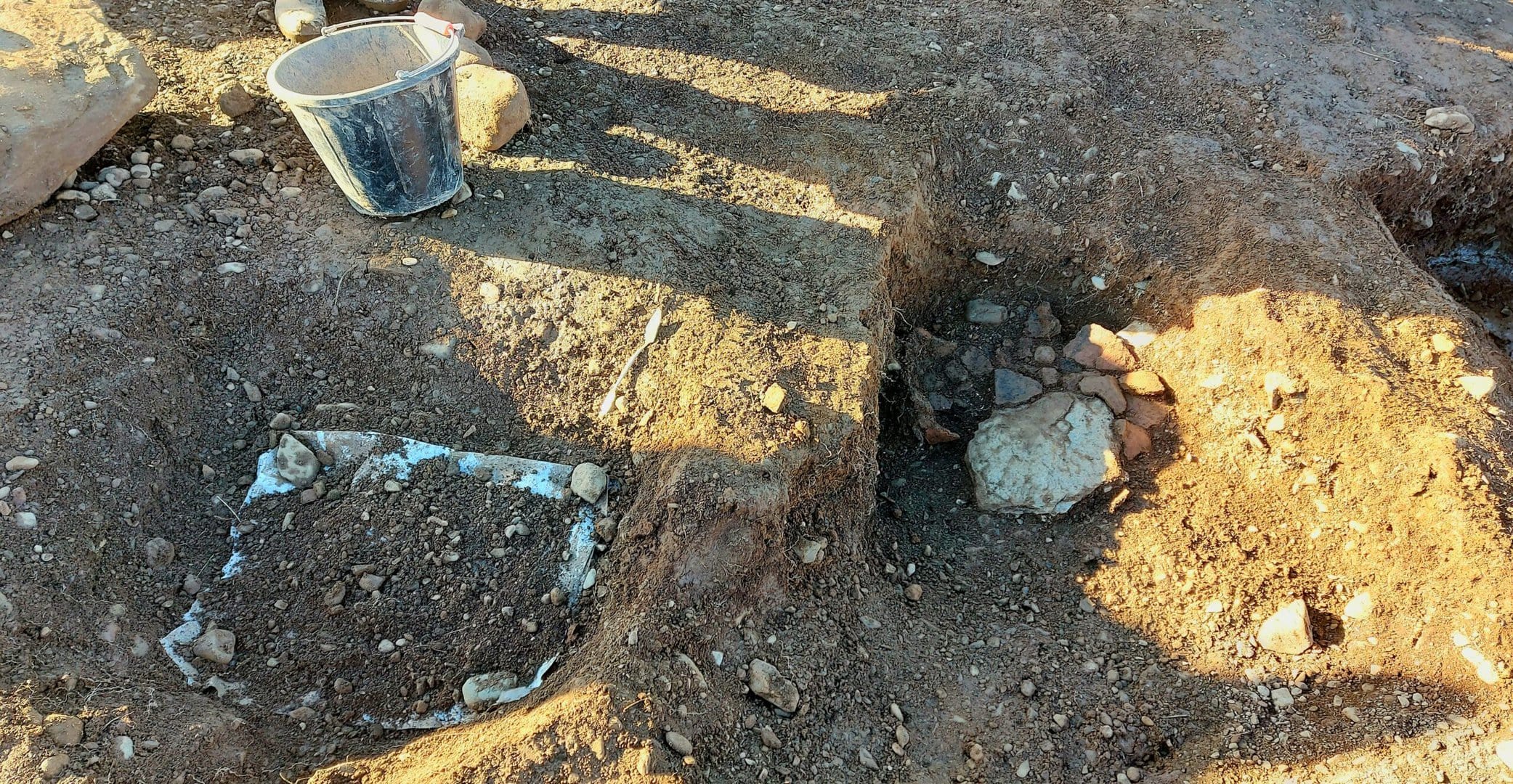
We had run out of time to remove the compacted cremated bones found under the large flat stone in a block – similar to that of the central pot rim.
This raised some controversial discussion about the ethics of archaeological investigation of the dead – doing ‘the right thing’ – what is the right thing?
Preserving evidence; removing evidence; extracting information; the value of potential information; requirements for analysis; retaining integrity of a grave site; the ‘duty of care’ to human remains; the ideal of keeping a person intact.
In this case, the bag of loose bone pieces will be taken for analysis. Everything will be meticulously catalogued to enable future investigations to access the archived information. The compacted bones were ‘put to bed’ (covered with Terram sheet and some soil prior to replace the flat stone) and preserve the remains for future investigation.
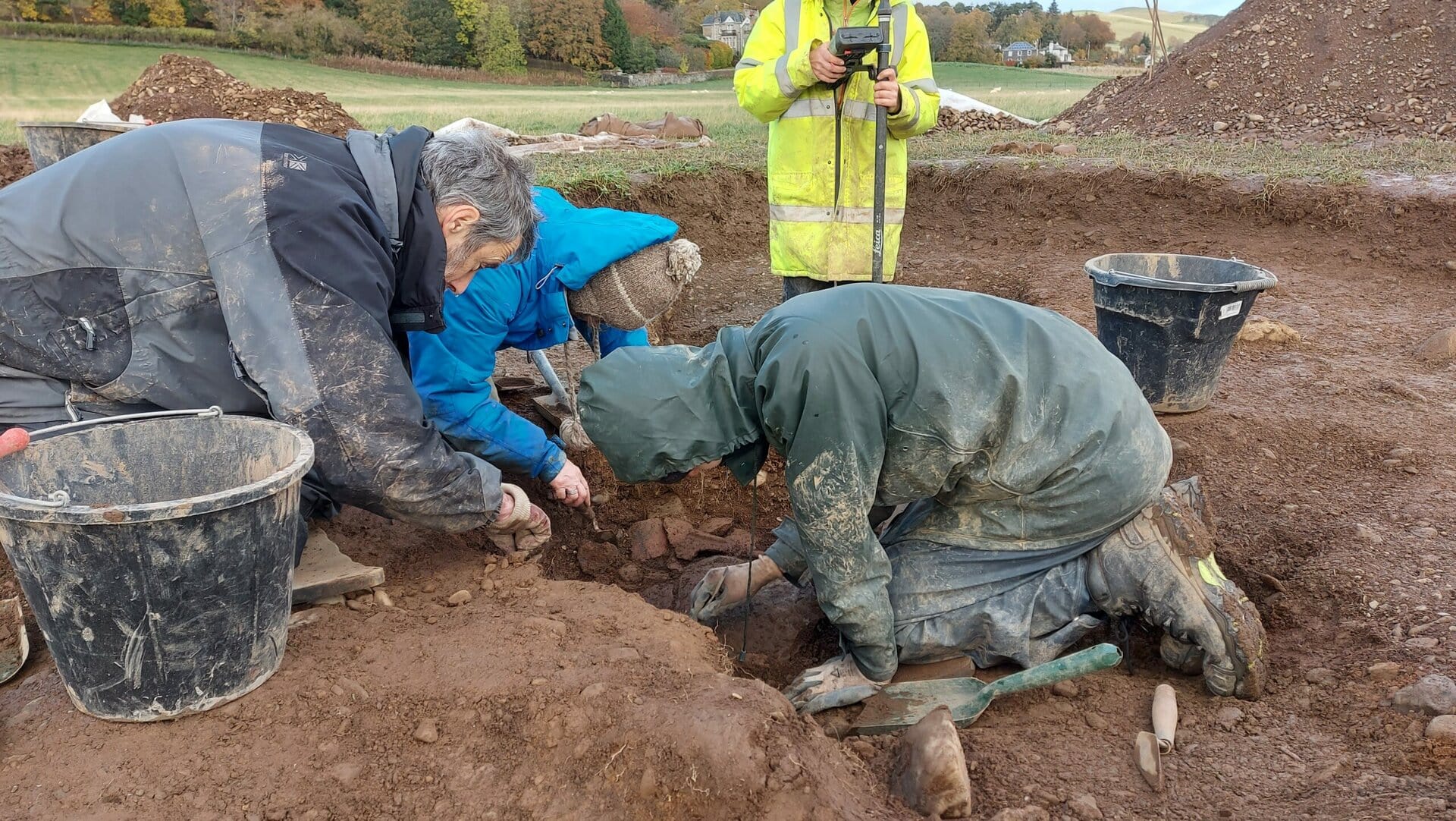
It was decided to excavate the large Bronze Age pot from the most recently exposed burial site. David, Cherry and Charlie took over the delicate task of cleaning the pieces of the large 4000 year old cremation urn prior to photography and extraction.
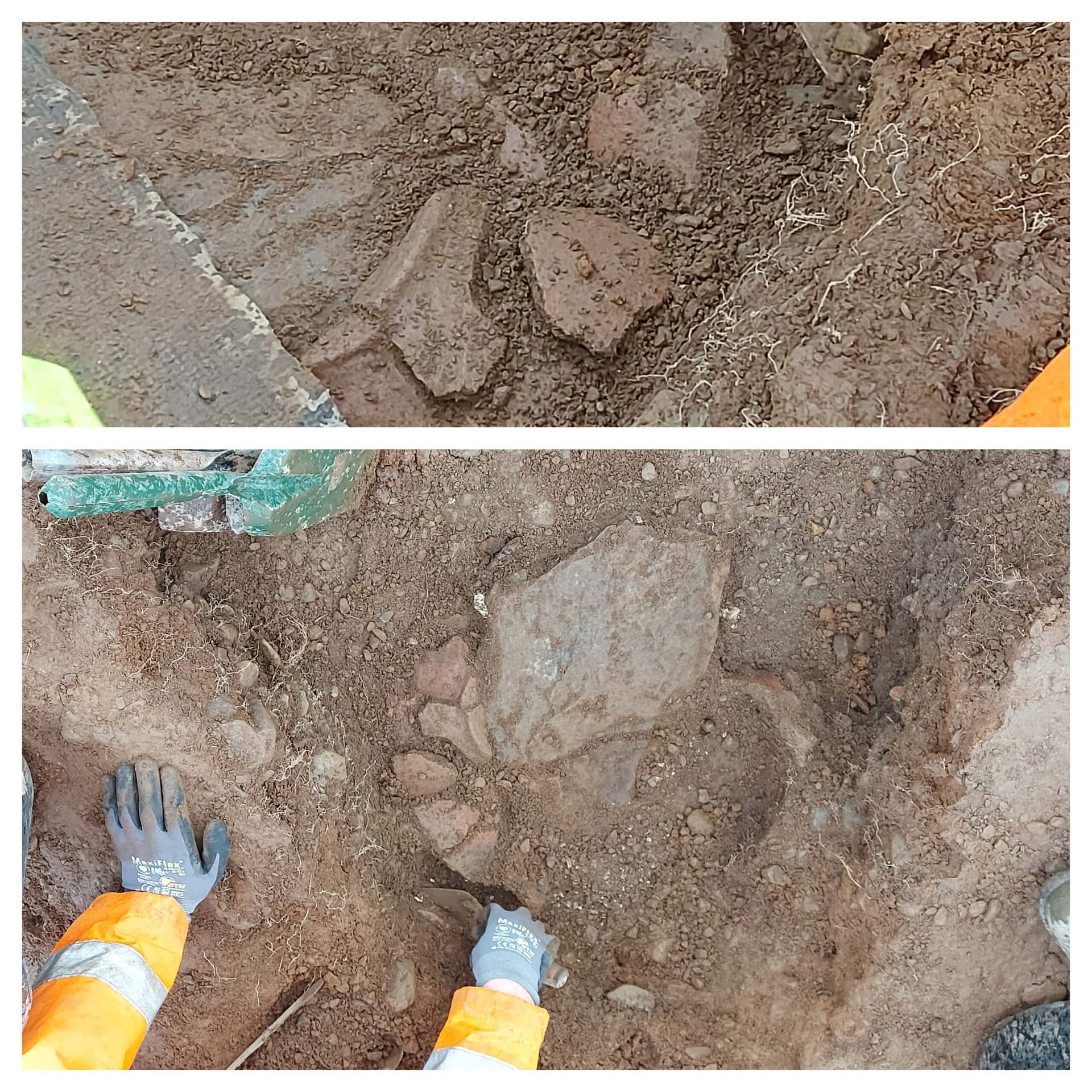
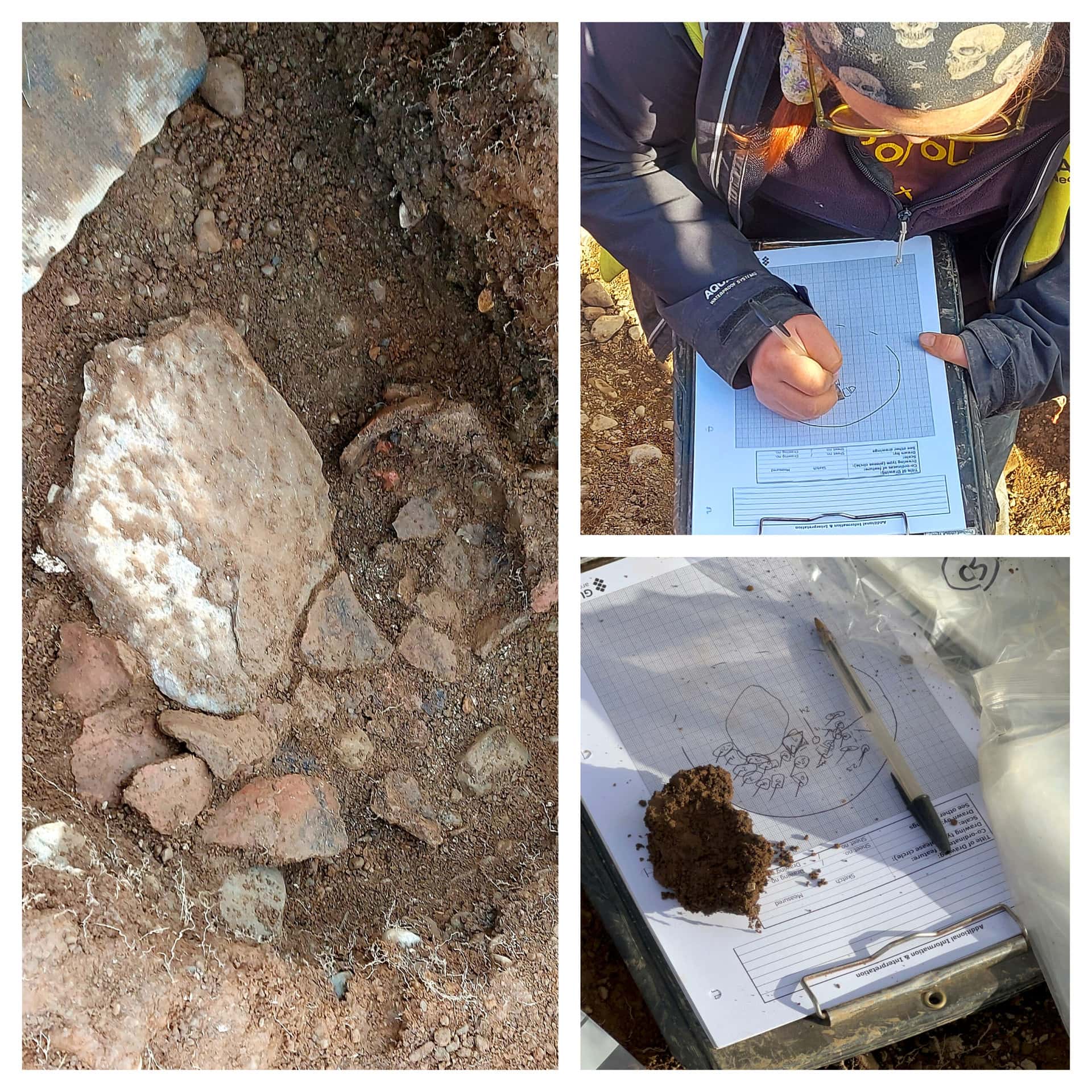
Osteoarchaeologist Amanda sketched a diagram of the 19 pieces to tick off as collected. There were 19 visible pieces – more than enough for everyone who wanted to help.
It was a remarkable moment none of us will forget.
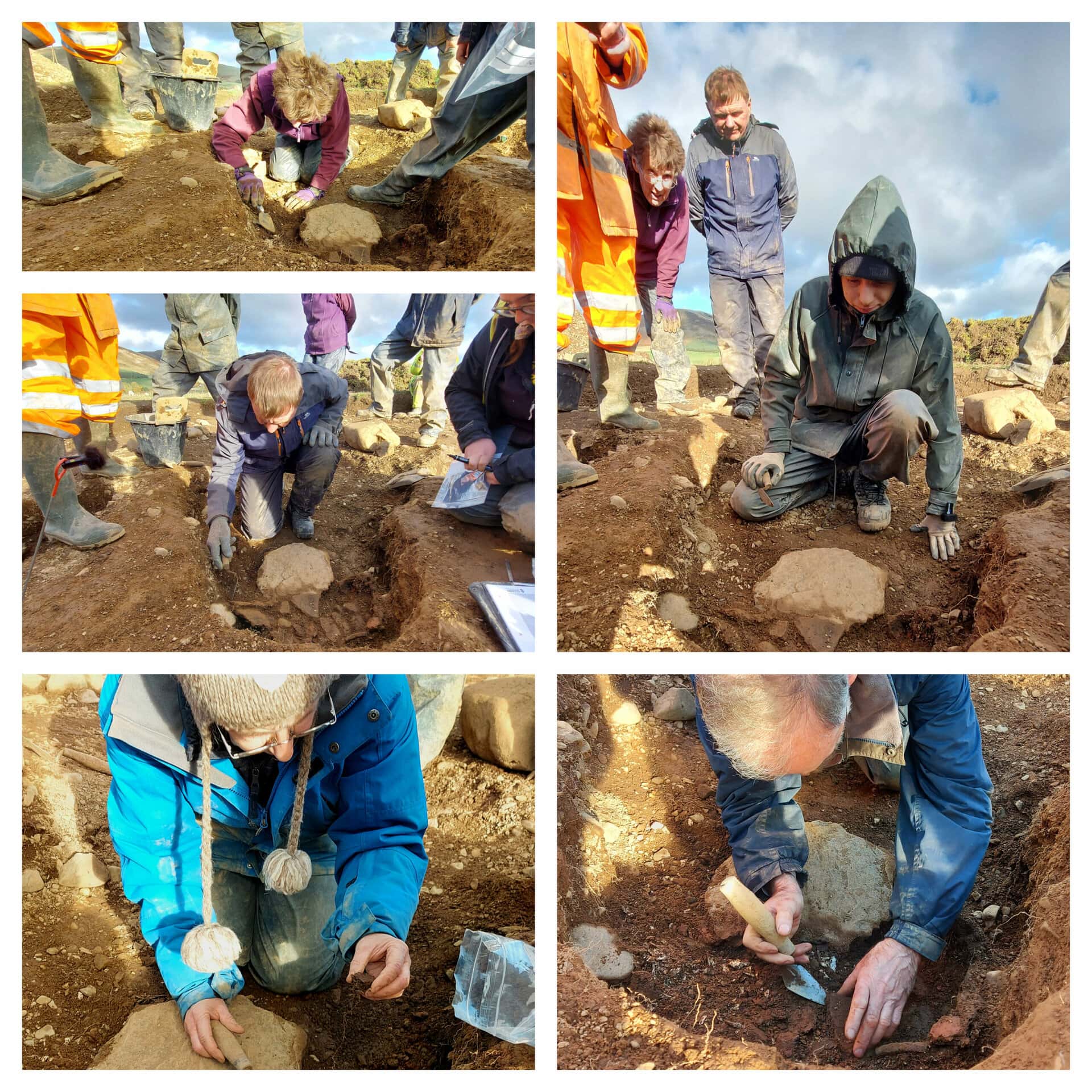
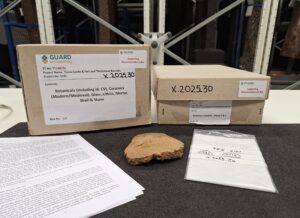
Once bagged, labelled and ticked off, the pieces were placed in an acid-free box for safe carriage to the GUARD laboratories where they will be preserved in acid free paper in climate controlled conditions. This pot had been interred at an earlier date than the central block which we had lifted on Day 8. It is thought that there may well be more pots underneath this one.
Watch a short video of the process of removing the pieces below.
For we volunteers, it was quite an experience.
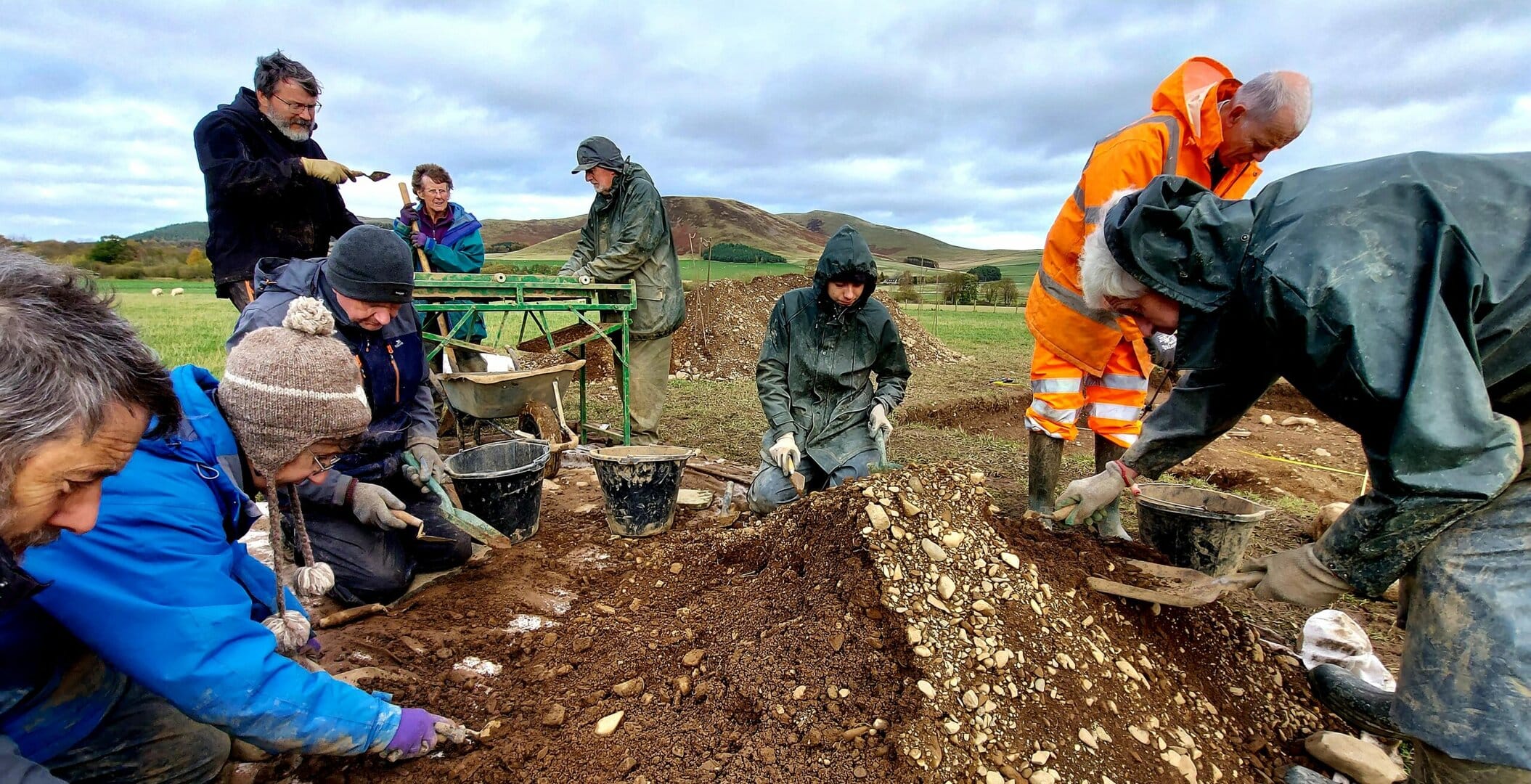
Following the pot extraction, we volunteers were kept busy sifting the last of the spoil as it was too wet to sieve whilst the GUARD staff concentrated on recording the site.
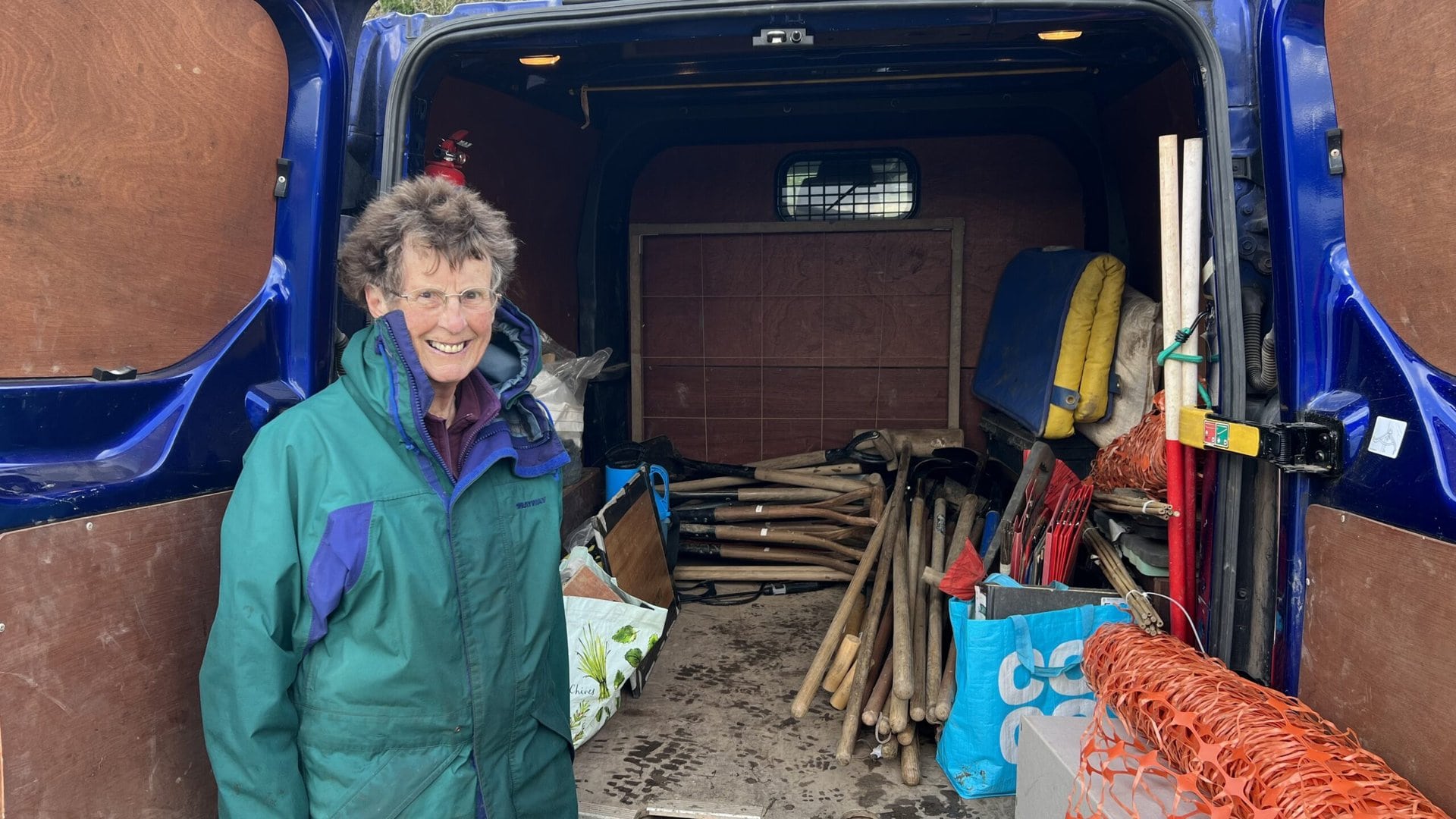
Joyce organised the loading up of the tools and equipment.
And then it was all feet on ground to back fill both trenches… Many thanks to Jim (the farmer) for providing a tractor – see video below!
It was really hard work!
This blog has been written from a volunteer’s point of view. Being part of a place, not only in terms of landscape but as part of a group of people, working together towards a joint goal, has been one of the most important things.
The people we have encountered, met again, got to know and got muddy with, over the past 2 weeks, has been as much a part of the experience as the archaeological dig itself.
Learning new things, the rights and wrongs, scratching the surface of complexities, witnessing both disappointment and wonder of something unfinished, seeing things from a different standpoint, listening to other perspectives and engaging with a wide variety of people, regardless of age and stage. This has all added up to an immeasurably rich experience to which each one of us has contributed.
The hollow sound of the un-lifted stone above a void… (see video above). We can only guess at what might lie underneath. That will be up to future archaeologists and volunteers (probably aided by new advances in technology).
It was everyone’s last day – it was with an odd mix of relief and not ever wanting it to end that the dig came to a close. It’s been an absolute blast!
POSTSCRIPT
The Beaker People
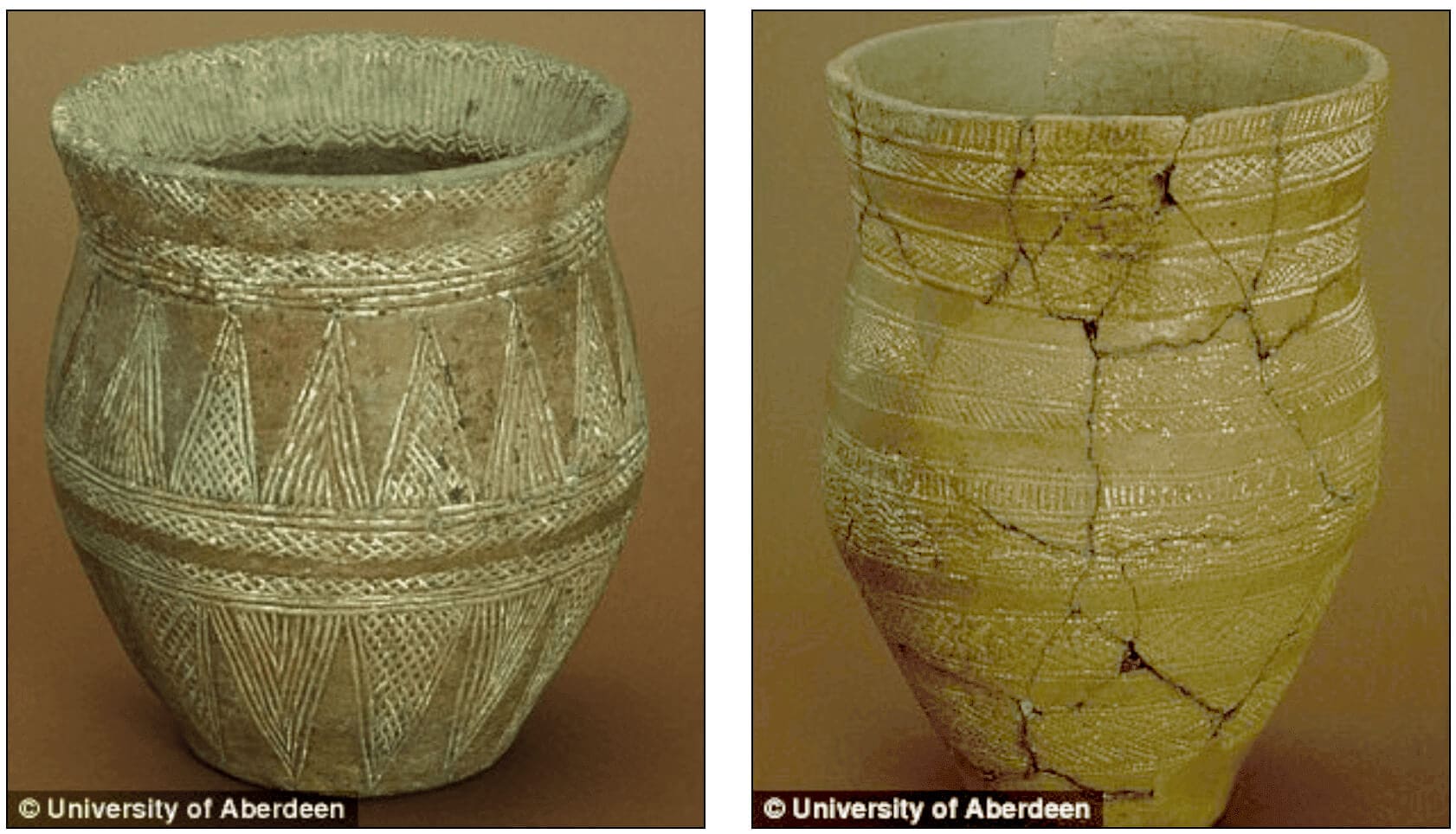
The ancestors of the people who are buried here were immigrants who came from continental Europe to Scotland about 4000 years ago and rapidly replaced the earlier Neolithic inhabitants.
They are known as the Beaker People because they brought with them the custom burying the ashes of their cremated dead in the distinctive bell-shaped pottery urns or beakers which we have been finding here at Thirlestane Barrows.
They also introduced metal-working and this was the beginning of the Bronze Age.



One Response
This was a a really splendid experience. I enjoyed digging at both Tinnis and Thirlestane with a great bunch of people who worked hard and were very good company. Thanks to Robin and GUARD for this wonderful opportunity and to Malc and Jane for the blog posts and lifts in their van. Looking forward to the post-ex results of our finds.
I think there is much more hidden in that landscape between Drumelzier and Broughton.