Some exciting results back from the post-excavation works – we now have the radiocarbon dating results.
The dates from the Thirlestane Round Barrow suggests a short span of burials in the 14th-13/12th centuries BC, which accords with the typological dating of the urn to the Middle Bronze Age.
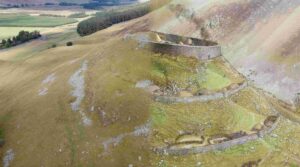
There seems to have been at least two phases of occupation of Tinnis Fort. The earliest phase was during the late Iron Age which ended with the burning of the rampart, causing the core of the rampart on the south-east side of the summit to vitrify. This took place sometime between AD 250 and AD 405, which is close to the OSL date from the Thirlestane Square Barrow ditch (AD 280 – AD 580). The OSL date also overlaps with the two mid-late sixth/early seventh century AD dates from Tinnis, which indicate subsequent occupation of the fort (including presumably rebuilding of the summit rampart).
Interestingly, the local Merlin legend is set around AD 600 and these two radiocarbon dates suggest that Tinnis Fort was occupied at this time. Does this support the theory that the origins of the story lie in Drumelzier?
But that’s not all. Two of the dates from the lower enclosure indicate that occupation continued sometime into the late ninth to the early eleventh century AD, when this part of the Scottish Borders likely belonged to the kingdom of Strathclyde.
Finally, the two latter dates indicate when the subsequent castle was occupied – sometime between the 15th and 17th centuries.